|
An Attempt to Cecede and Join Finland (1918-1922)
In the aftermath of the Russian
revolution and Finnish independence (December 1917), things started to happen
in East Karelia too. On 17 March 1918 a
meeting was convened in the village
of Uhtua. The meeting
expressed the wish to separate from Russia
and called for union with Finland.
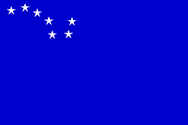
Later in 1918 the Uhtua community used a flag consisting of a blue field with
seven white five-pointed stars in the canton (representing the Ursa Major
constellation). According to Paskov [pas94],
the designer of this flag was J. Heiska.
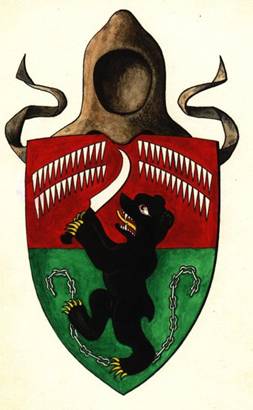
Arms of East Karelia by Mikhail Medvedev
If you try to find Uhtua on a
modern map, you will probably not find it. In 1935 the village was renamed
Kalevala for the century of the publication of this work by Lönnrot. Much of
the material for the Kalevala was collected in East
Karelia.
The East
Karelians were quickly caught in the middle of the struggles
between red and white Russian forces, the intervention forces under the
British and Finnish volunteer expeditions. The military situation changed
quickly. However, the East Karelians worked
to set up a government of their own.
In July 1919 a conference of delegates
from White Sea Karelian parishes met in Uhtua and appointed an East Karelian
Committee that acted as a provisional government of East
Karelia. This provisional government organized the first East
Karelian Diet, elected by universal suffrage and consisting of
representatives from twelve municipalities (or parishes). The Diet sat from
21 March to 1 April 1920 in Uhtua and appointed a regular six-member
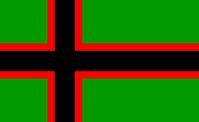
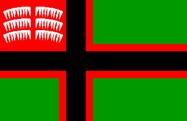
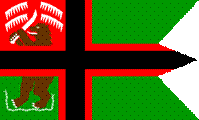
government. On 22 March the diet called for independence from Russia and
adopted arms and a flag. The flag and arms were designed by Finnish artist
Akseli Gallen-Kallela.
(Click here
to see postage stamps of Uhtua Karelia)
The short-lived attempt of East Karelian statehood
was put to an end by Red Army operations of 1921-22 and the lack of
sufficient international support of Karelian aspirations.

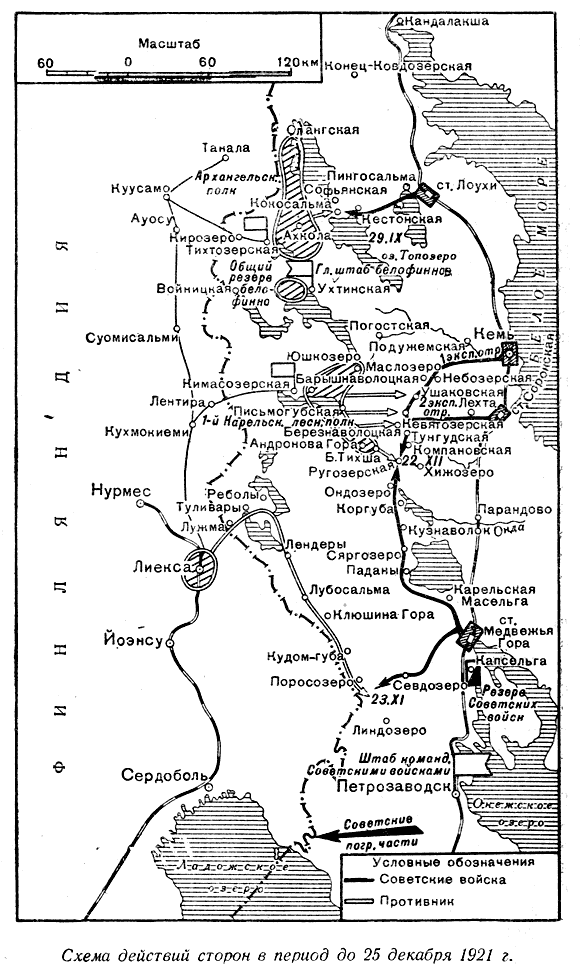
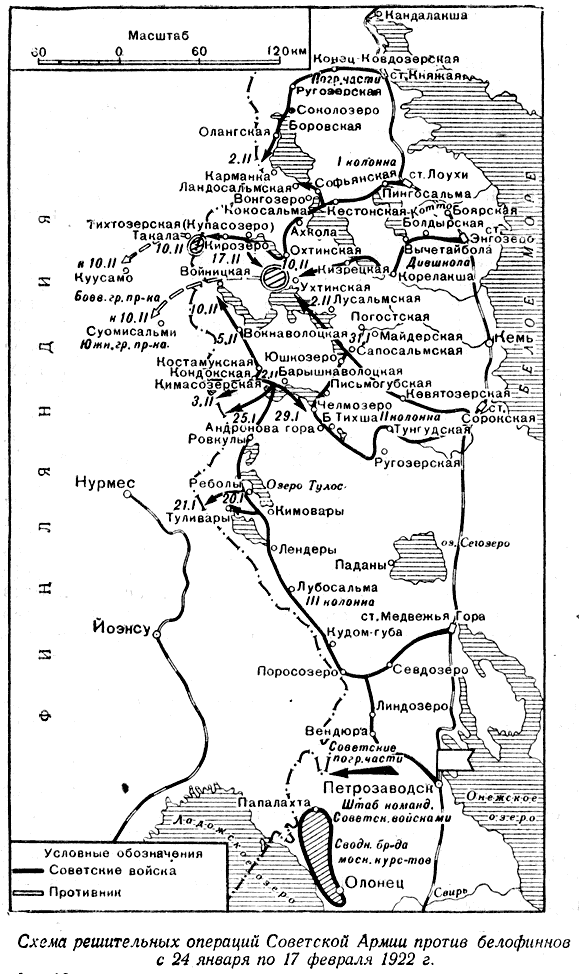
Below are the two Russian maps reflecting Karelian war of
XII.1921-02.1922 from http://militera.lib.ru/h/hesin_ss/ill.html
Aunus
Karelia
A short-lived government existed
also for Aunus Karelia. The provisional government of Aunus was set up when
Finnish volunteer forces advanced into the area in April 1919. An assembly was
called and met in Rajakontu 5-6 June 1919. However, the Russian Bolsheviks
quickly struck back and by 10 June the provisional government and the Finnish
forces were back in Finland.
That was the end of the Aunus government.
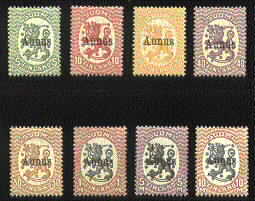
(Click here
to see postage stamps of the short-lived Aunus Karelia)
Tver Karelia
After the peace
between Russia and Sweden in 1617 gave much of the
Kexholm/Käkisalmi province to Sweden,
several thousands Orthodox Karelians left to be resettled in the Tver
province northwest of Moscow.
The 1926 census put the number of Tver Karelians to 140,000. In the 1930s a
separate Tver Karelian language was established. A national area was set up
in July 1937, but as the Soviet authorities changed their mind about the Tver
Karelians, the national area was abolished in early 1939. A dramatic reduction
in the population followed, and in the 1989 there were only 23,000 Tver
Karelians left.
|