|
|
By Mieczyslaw Kasprzyk Maps: Andrew Andersen,
Wikipedia The New |
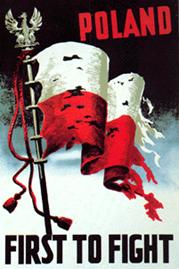
Invasion:
On September 1st., 1939, 1.8
million German troops invaded
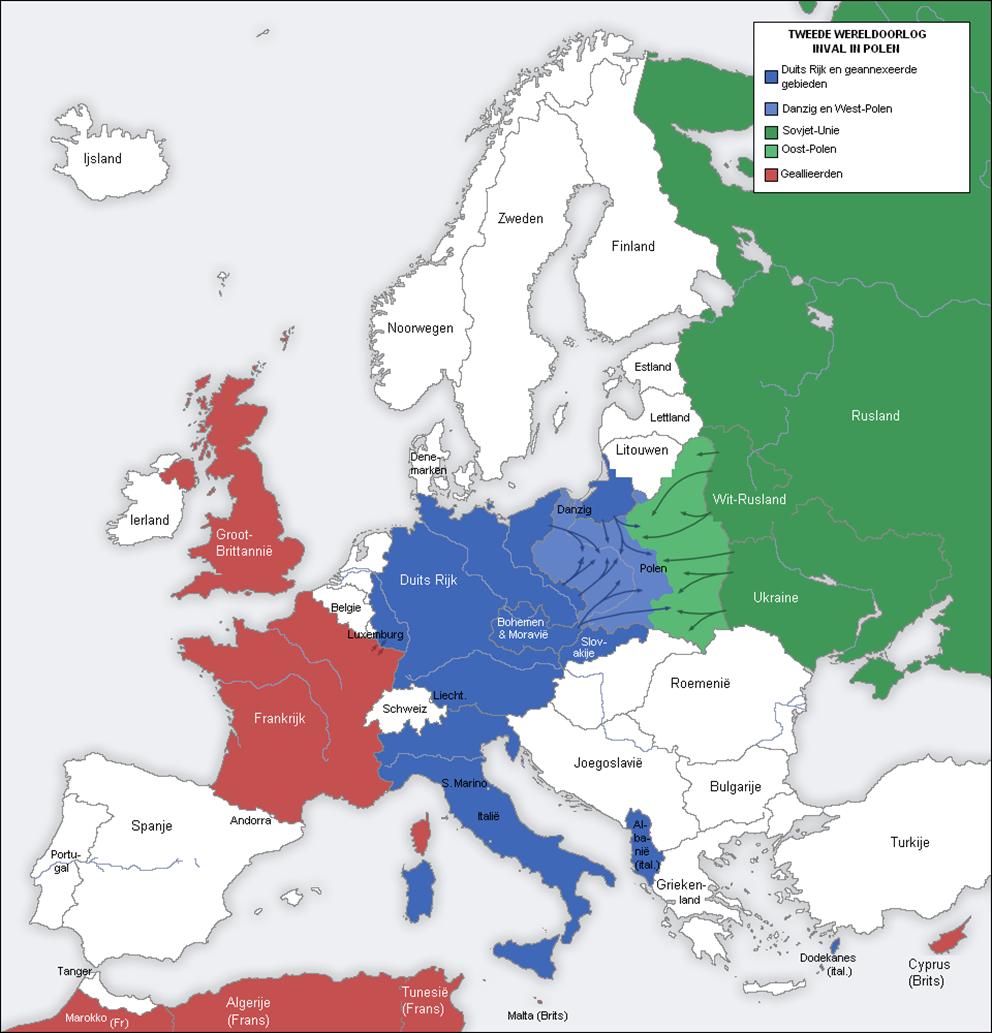
There are
many "myths" that surround the September Campaign; the fictional
Polish cavalry charges against German tanks (actually reported by the Italian
press and used as propaganda by the Germans), the alleged destruction of the
Polish Air Force on the ground, or claims that Polish armour
failed to achieve any success against the invaders. In reality, and despite the
fact that Poland was only just beginning to modernize her armed forces and had
been forced (by Britain and France) to delay mobilization (which they claimed
might be interpreted as aggressive behaviour) so
that, at the time of invasion, only about one-third of her total potential
manpower was mobilized, Polish forces ensured that the September campaign was
no "walk-over". The Wehrmacht had so
under-rated Polish anti-tank capabilities (the Polish-designed anti-tank gun
was one of the best in the world at that time) that they had gone into action
with white "balkankreuz", or crosses,
prominently displayed in eight locations; these crosses made excellent aiming
points for Polish gun-sights and forced the Germans to radically rethink their
national insignia, initially overpainting them in
yellow and then, for their later campaigns, adopting the modified "balkankreuz" similar to that used by the Luftwaffe.
The recently-designed 7TP "czolg lekki", or light tank, the first in the world to be
designed with a diesel engine, proved to be superior to German tanks of the
same class (the PzKpfw I and II) inflicting serious
damage to the German forces, limited only by the fact that they were not used
in concentrated groups. They were absorbed by the Germans into their own Panzer
divisions at the end of the campaign.
On September 17th. Soviet forces invaded from the east. Warsaw
surrendered 2 weeks later, the garrison on the Hel peninsula surrendered on
October 2nd., and the Polesie Defense group, after
fighting on two fronts against both German and Soviet forces, surrendered on
October 5th. The Poles had held on for twice as long as had been expected and
had done more damage to the Germans than the combined British and French forces
were to do in 1940. The Germans lost 50,000 men, 697 planes and 993 tanks and armoured cars.
Thousands
of soldiers and civilians managed to escape to
The Fourth Partition:
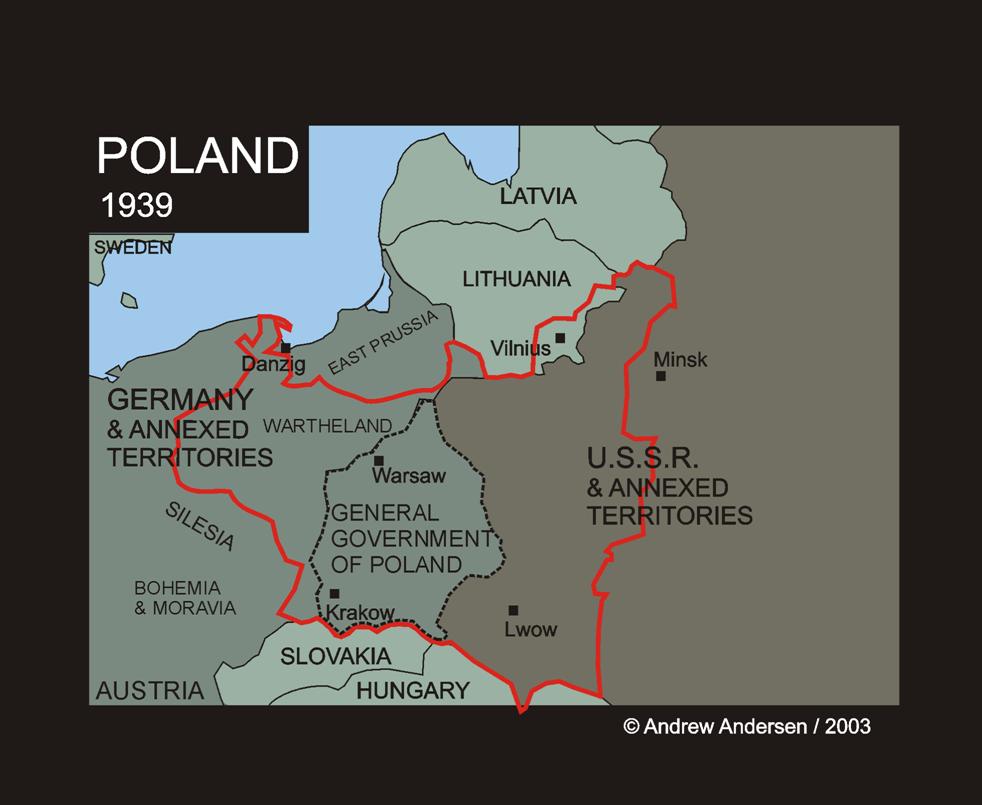
Under the German-Soviet pact
In the
Soviet zone 1.5 million Poles (including women and children) were transported
to labour camps in
The
Germans declared their intention of eliminating the Polish race (a task to be
completed by 1975) alongside the Jews. This process of elimination, the
"Holocaust", was carried out systematically. All members of the
"intelligentsia" were hunted down in order to destroy Polish culture
and leadership (many were originally exterminated at Oswiencim
- better known by its German name,
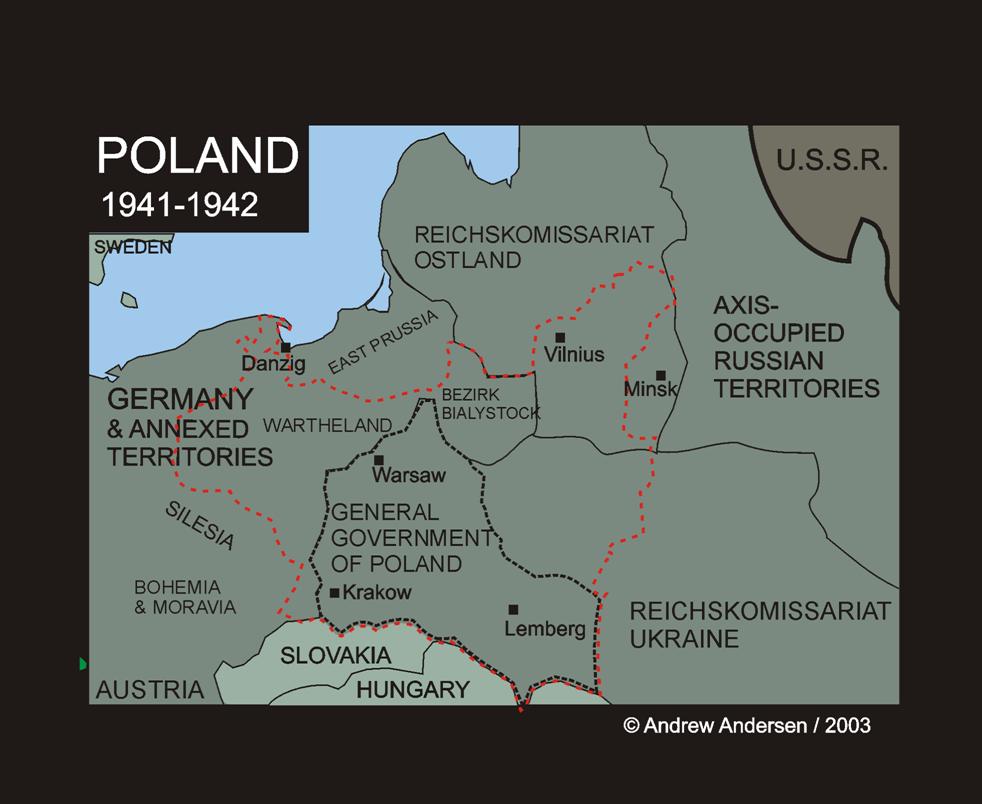
The
Polish Jews were herded into Ghettos where they were slowly starved and cruelly
offered hopes of survival but, in fact, ended up being shot or gassed. In the
end they were transported, alongside non-Jewish Poles, Gypsies and Soviet POWs,
to extermination camps such as Auschwitz and Treblinka; at
Many
non-Jewish Poles were either transported to
|
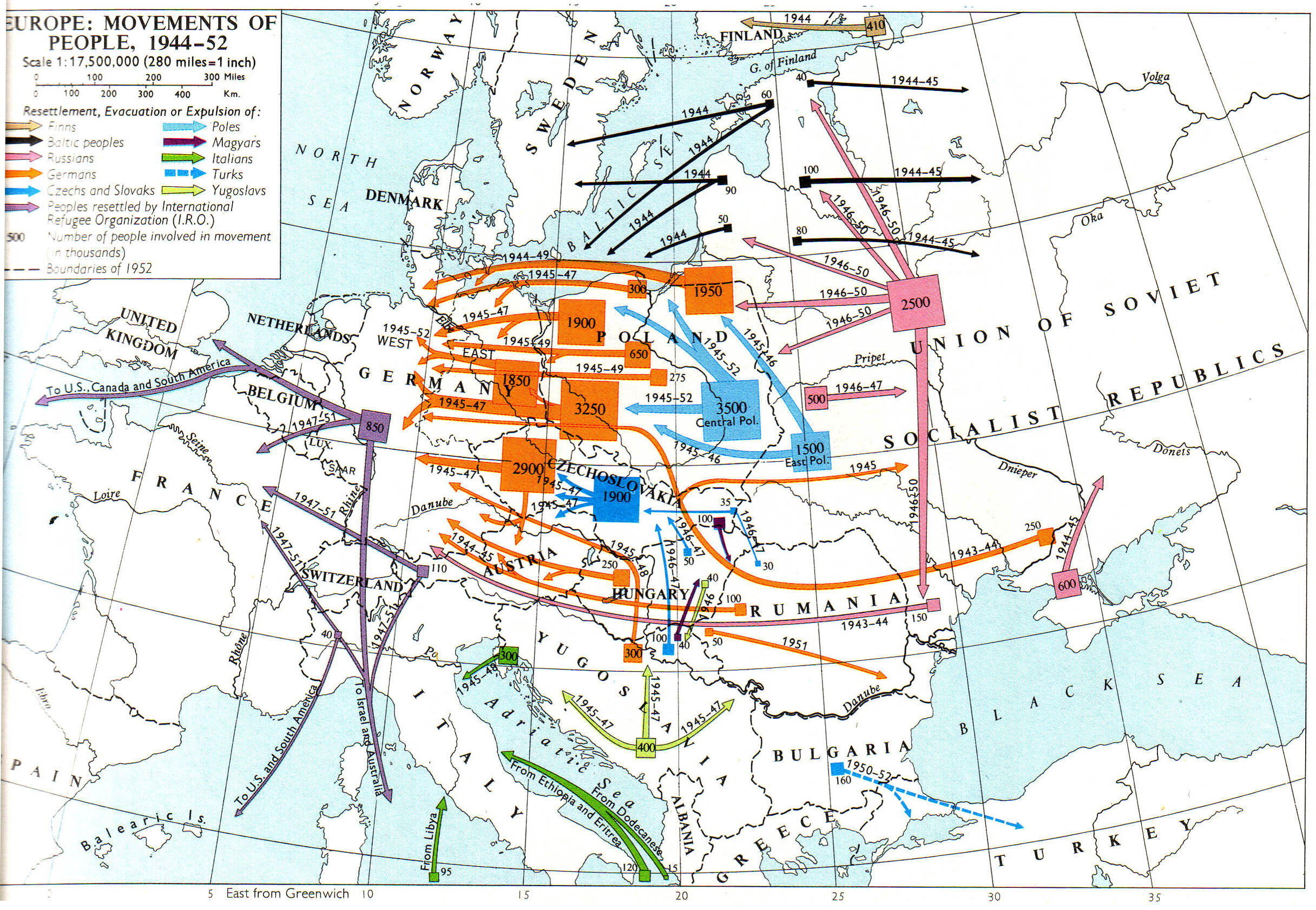
Click on the minimap
To see movements of people in |
|
Click on the picture
To see modern photographs of
the lands abandoned by the Poles |
|

Despite
such horror the Poles refused to give in or cooperate (there were no Polish
collaborators as in other occupied countries). The Polish Underground or AK (Armia Krajowa or Home Army) was
the largest in
Fighting on all Fronts:
The Polish Army, Navy and Air Force reorganised abroad and continued to fight the Germans. In
fact they have the distinction of being the only nation to fight on every front
in the War. In 1940 they fought in
Polish
Squadrons played an important role in the Battle of Britain, accounting for 12%
of all German aircraft destroyed at the cost of 33 lives. By the end of the war
they had flown a total of 86,527 sorties, lost 1669 men and shot down 500
German planes and 190 V1 rockets.
The
Polish Navy, which had escaped intact, consisted of 60 vessels, including 2
cruisers, 9 destroyers and 5 submarines ( one of which
was the famous "Orzel") which were involved
in 665 actions at sea. The first German ship sunk in the war was sunk by Polish
ships. The Navy also took part in the D-Day landings.
When the
Soviet Union was attacked by
All the
Polish forces took part in the Allied invasion of Europe and liberation of
In 1943 a
division of Polish soldiers was formed in
The
"Home Army", under the command of General Stefan Roweki
(code-named "Grot"), and after his capture in 1943 (he was later
murdered), by General Tadeusz Komorowski
(code-named "Bor"), fought a very varied
war; at times in open combat in brigade or division strength, at times involved
in sabotage, often acting as execution squads eliminating German officials, and
often fighting a psychological campaign against German military and civilians.
It was a costly war since the Germans always took reprisals.
The
Intelligence Service of the Home Army captured and sent parts of the V1 to
London for examination, providing information on German military movements
(giving advanced warning of the German plan to invade Russia), and gave the RAF
full information about Peenemunde, where the Germans were producing V2 rockets.
Betrayal:
The crime of Katyn
was discovered in 1943 and created a rift in Polish-Soviet relations. From now
on the Home Army was attacked by Soviet propaganda as collaborating with the
Germans and being called on to rise against the Germans once the Red Army
reached the outskirts of
Secretly,
at Teheran, the British and Americans agreed to letting the Russians profit
from their invasion of
When the
Russians crossed into
On August
1, 1944, with the Russian forces on the right bank of the Vistula, the Home
Army rose in
The
defeat in
With the
liberation of
The war
ended on May 8th, 1945.
The Cost:
The Poles are the people who really lost the war.
Over half
a million fighting men and women, and 6 million civilians (or 22% of the total
population) died. About 50% of these were Polish Christians and 50% were Polish
Jews. Approximately 5,384,000, or 89.9% of Polish war
losses (Jews and Gentiles) were the victims of prisons, death camps, raids,
executions, annihilation of ghettos, epidemics, starvation, excessive work and ill
treatment. So many Poles were sent to concentration camps that virtually every
family had someone close to them who had been tortured or murdered there.
There
were one million war orphans and over half a million invalids.
The
country lost 38% of its national assets (
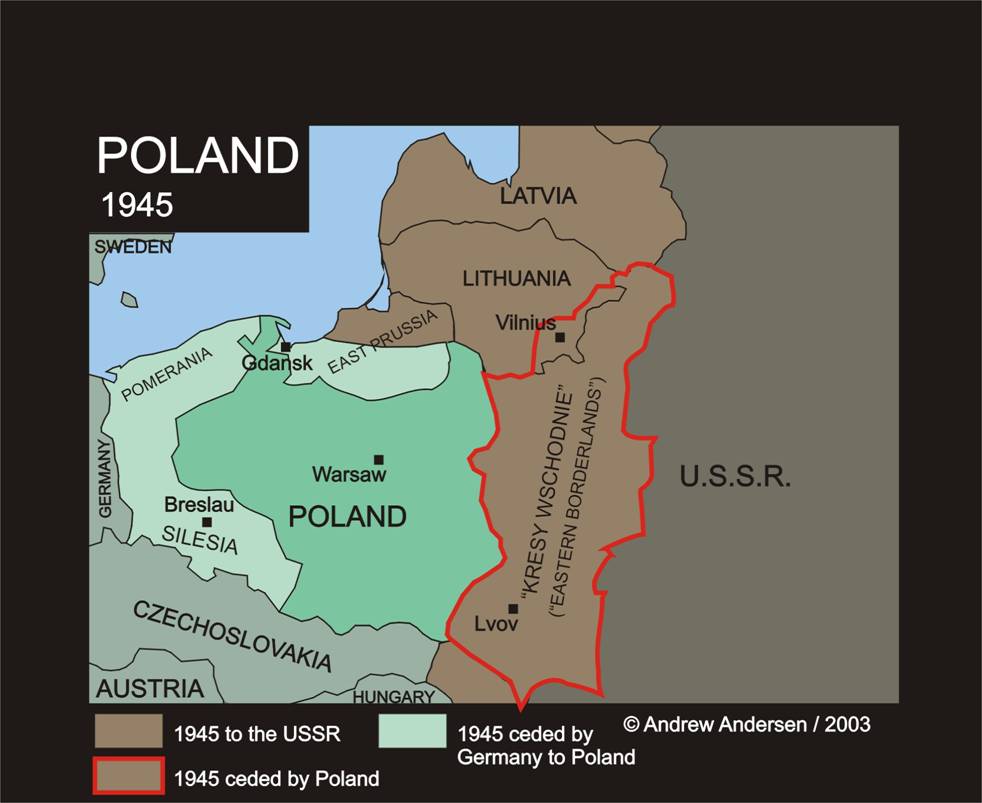
Many Poles
could not return to the country for which they has fought because they belonged
to the "wrong" political group or came from eastern Poland and had
thus become Soviet citizens. Others were arrested, tortured and imprisoned by
the Soviet authorities for belonging to the Home Army.
Although
"victors" they were not allowed to partake in victory celebrations.
Through
fighting "For Our Freedom and Yours" they had exchanged one master
for another and were, for many years to come, treated as "the enemy"
by the very Allies who had betrayed them at Teheran and
Originally published at http://www.kasprzyk.demon.co.uk/www/HistoryPolska.html
SEE ALSO RELATED BIOGRAPHIES